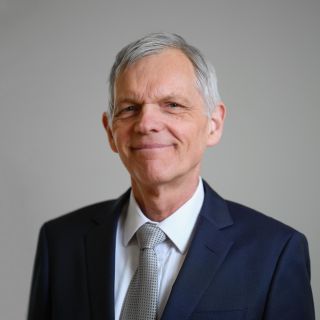
Matthew Robson MA PhD
University Research Lecturer
Selected Publications
- Dall'Armellina Erica, Piechnik Stefan K, Ferreira Vanessa M, Si Quang L, Robson Matthew D, Francis Jane M, Cuculi Florim, Kharbanda Rajesh K, Banning Adrian P, Choudhury Robin P, Karamitsos Theodoros D, and Neubauer Stefan (2012) Cardiovascular magnetic resonance by non contrast T1-mapping allows assessment of severity of injury in acute myocardial infarction. J Cardiovasc Magn Reson, 14:15.
- Suttie J J, Delabarre L, Pitcher A, van de Moortele P F, Dass S, Snyder C J, Francis J M, Metzger G J, Weale P, Ugurbil K, Neubauer S, Robson M, and Vaughan T (2012) 7 Tesla (T) human cardiovascular magnetic resonance imaging using FLASH and SSFP to assess cardiac function: validation against 1.5 T and 3 T. NMR Biomed, 25(1):27-34.
- Biasiolli Luca, Lindsay Alistair C, Choudhury Robin P, and Robson Matthew D (2011) Loss of fine structure and edge sharpness in fast-spin-echo carotid wall imaging: measurements and comparison with multiple-spin-echo in normal and atherosclerotic subjects. J Magn Reson Imaging, 33(5):1136-43.
- Hodgson R J, Evans R, Wright P, Grainger A J, O'Connor P J, Helliwell P, McGonagle D, Emery P, and Robson M D (2011) Quantitative magnetization transfer ultrashort echo time imaging of the Achilles tendon. Magn Reson Med.
- Rial Belen, Robson Matthew D, Neubauer Stefan, and Schneider Jurgen E (2011) Rapid quantification of myocardial lipid content in humans using single breath-hold 1H MRS at 3 Tesla. Magn Reson Med, 66(3):619-24.
| matthew.robson@cardiov.ox.ac.uk | |
| Tel | +44 1865 222732 |
| Contact address | OCMR, John Radcliffe Hospital, Oxford, OX3 9DU |
| Department | Department of Cardiovascular Medicine |
Improving disease diagnosis using Cardiac MRI and MRS at high field strength
Cardiac Magnetic Resonance Imaging is a technology that has emerged as an incredibly powerful tool for visualising the human heart. In the last 15 years the method has gone from an approach that was academically interesting to one that is used clinically on hundreds of patients every day. In oxford we enjoy being part of this revolution. Specifically Oxford is pioneering the use of high magnetic field MRI to push forward the boundaries of what is possible with MR of the entire cardiovascular system.
The cardiac physics team, which I presently lead, works in a number of areas. These include the use of MRS (magnetic resonance spectroscopy) for directly measuring the concentration of metabolites in the heart (using both the proton and the phosphorus signatures), which benefits greatly to our access to our 3 Tesla and 7 Tesla human scanners. We are also investigating how we can use our 7 Tesla human scanner (one of only 2 in the UK, and 30 worldwide) to better diagnose cardiac disease. Cardiac spectroscopy is an area that was first pioneered in Oxford over 20 years ago and with these latest technical innovations we hope that we will at last make is clinically useful.
Another area of expertise lies in the characterising tissue using its MR properties. Specifically we are interested in the relaxation times of the tissues which we have found demonstrate remarkable correlations with disease. (figure ShMOLLI provides an accurate T1 map in a single breath-hold). The new methods that we have developed make it very easy to perform precise diagnoses that makes cardiac MRI much easier to perform. We believe that these mapping methods are set to revolutionise cardiac MRI and now we have validated the applicability of these methods in the clinic (with our clinical partners in Oxford and beyond) we are working closely with Siemens Healthcare to make these methods available to routine clinical MRI sites.
A further area with which I have worked is in Ultra-Short Echo Time (UTE) imaging, in which we reduce the imaging time down from milliseconds to microseconds. This enables us to image hydrogen nuclei that previously were invisible to MRI. Usefully the protons associated with collagen fall into this category and consequently these approaches have found great utility when imaging the musculo skeletal systems of the body. Although this isn’t a direct area of research for me, I am fortunate enough to be able to collaborate with groups using my methods, which is very exciting.