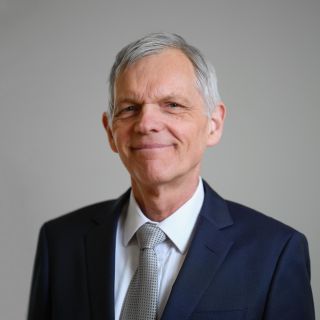
Robin P Choudhury MA, DM, FACC
Clinical Director Oxford Acute Vascular Imaging Centre and Honorary Consultant Cardiologist
Selected Publications
- Lee Justin MS, Robson Matthew D, Yu Ly-Mee, Shirodaria Cheerag C, Cunnington Colin, Kylintireas Ilias, Digby Janet E, Bannister Thomas, Handa Ashok, Wiesmann Frank, Durrington Paul N, Channon Keith M, Neubauer Stefan, and Choudhury Robin P (2009) Effects of high-dose modified-release nicotinic acid on atherosclerosis and vascular function: a randomized, placebo-controlled, magnetic resonance imaging study. J Am Coll Cardiol, 54(19):1787-94.
- Lee Justin MS, Wiesmann Frank, Shirodaria Cheerag, Leeson Paul, Petersen Steffen E, Francis Jane M, Jackson Clare E, Robson Matthew D, Neubauer Stefan, Channon Keith M, and Choudhury Robin P (2008) Early changes in arterial structure and function following statin initiation: quantification by magnetic resonance imaging. Atherosclerosis, 197(2):951-8.
- Lindsay Alistair C and Choudhury Robin P (2008) Form to function: current and future roles for atherosclerosis imaging in drug development. Nat Rev Drug Discov, 7(6):517-29.
- McAteer Martina A, Schneider Jurgen E, Ali Ziad A, Warrick Nicholas, Bursill Christina A, von zur Muhlen Constantin, Greaves David R, Neubauer Stefan, Channon Keith M, and Choudhury Robin P (2008) Magnetic resonance imaging of endothelial adhesion molecules in mouse atherosclerosis using dual-targeted microparticles of iron oxide. Arterioscler Thromb Vasc Biol, 28(1):77-83.
- McAteer Martina A, Sibson Nicola R, von Zur Muhlen Constantin, Schneider Jurgen E, Lowe Andrew S, Warrick Nicholas, Channon Keith M, Anthony Daniel C, and Choudhury Robin P (2007) In vivo magnetic resonance imaging of acute brain inflammation using microparticles of iron oxide. Nat Med, 13(10):1253-8.
| robin.choudhury@cardiov.ox.ac.uk | |
| Tel | + 44 (0) 1865 234664 |
| Fax | +44 (0) 1865 234667 |
| Email (PA) | eunice.berry@ndm.ox.ac.uk |
Work in this group is focused in three areas:
(1) Development and application of IMAGING TECHNIQUES TO CHARACTERIZE ATHEROSCLEROSIS AND VASCULAR DISEASE. The aim is to obtain techniques that will (a) provide insights into the pathophysiology of atherosclerosis and its complications; (b) obtain earlier and more refined diagnosis and (c) quantify the response to therapeutic interventions.
Clinical Science: Using ‘multi-modal’ vascular MRI in the Oxford Clinical Magnetic Resonance Centre (OCMR) we measure endothelial function, large vessel physiology and atherosclerosis burden in an intergrated examination. In this way it has been possible to characterise disease and quantify response to specific treatments rapidly and in small numbers of patients (see Lee et al, Atherosclerosis, 2009).
Basic science: We have developed a new class of ligand-conjugated micro-particles of iron oxide for molecular imaging. Using MRI at high field strength (7-11T) we are working to develop imaging probes that target specific molecules and through collaboration (below) have applied these to illuminate pathology in diverse models of disease that include: atherosclerosis and thrombosis, stroke, ischaemia, reperfusion injury and multiple sclerosis (McAteer et al, ATVB 2008; Nature Medicine 2007).
(2) Development and application of IMAGING TECHNIQUES TO CHARACTERISE 'UPSTREAM' and 'DOWNSTREAM' pathology in acute vascular syndromes. The Oxford Acute Vascular Imaging Centre (above) provides unique opportunities to study the 'upstream' cause and 'downstream' consequences of acute myocardial infarction and stroke. AVIC is equipped with a 3T Siemens Verio MR scaner in functional continuity with a fully equipped invasive angiography suite.
(3) Interventions to retard progression and induce REGRESSION OF ATHEROSCLEROSIS.
Clinical Science. We have recently completed follow-up in a randomized, double blind, placebo controlled trial examining the effects of HDL-cholesterol elevation with nicotinic acid on atherosclerosis burden and vascular function, demonstrating regression of atherosclerosis in patients treated with niacin (vs placebo) (Lee et al J AM Coll Cardiolol 2009)
Basic science: Investigation of the role of perivascular adipose tissue in the progression of atherosclerosis and in interventions that reduce inflammation (Digby et al Atherosclerosis 2010).
Group members
Mr Asim Akhtar
Dr Erica Dall'Armelina
Dr Janet Digby
Dr Andrew Jefferson
Dr Alistair Lindsay
Dr Martina A McAteer
Dr Neil Ruparelia
Principal Collaborators
Dr Daniel Anthony (Department of Pharmacolgy, Oxford,) Professor Keith Channon (Cardiovascular Medicine, Oxford), Professor Ben Davis (Department of Chemistry, Oxford) Prof Zahi Fayad, (Mount Sinai, New York) Dr David Greaves (Sir William Dunn School of Pathology, Oxford), Professor Peter Jezzard (FMRIB), Professor Stefan Neubauer (Cardiovascular Medicine, Oxford), Dr Matt Robson (Cardiovascular Medicine, Oxford),
Dr James Rudd (Cambridge), Dr Jürgen Schneider (Cardiovascular Medicine, Oxford), Dr Nicola Sibson (Radiation, Oncology and Biology, Oxford), Professor Kathryn Wood (Nuffield Department of Surgery, Oxford)
Sources of Funding
Oxford Comprehensive Biomedical Research Centre, NIHR Funding Scheme